Serving Colton, CA and surrounding areas. (909) 679-6853
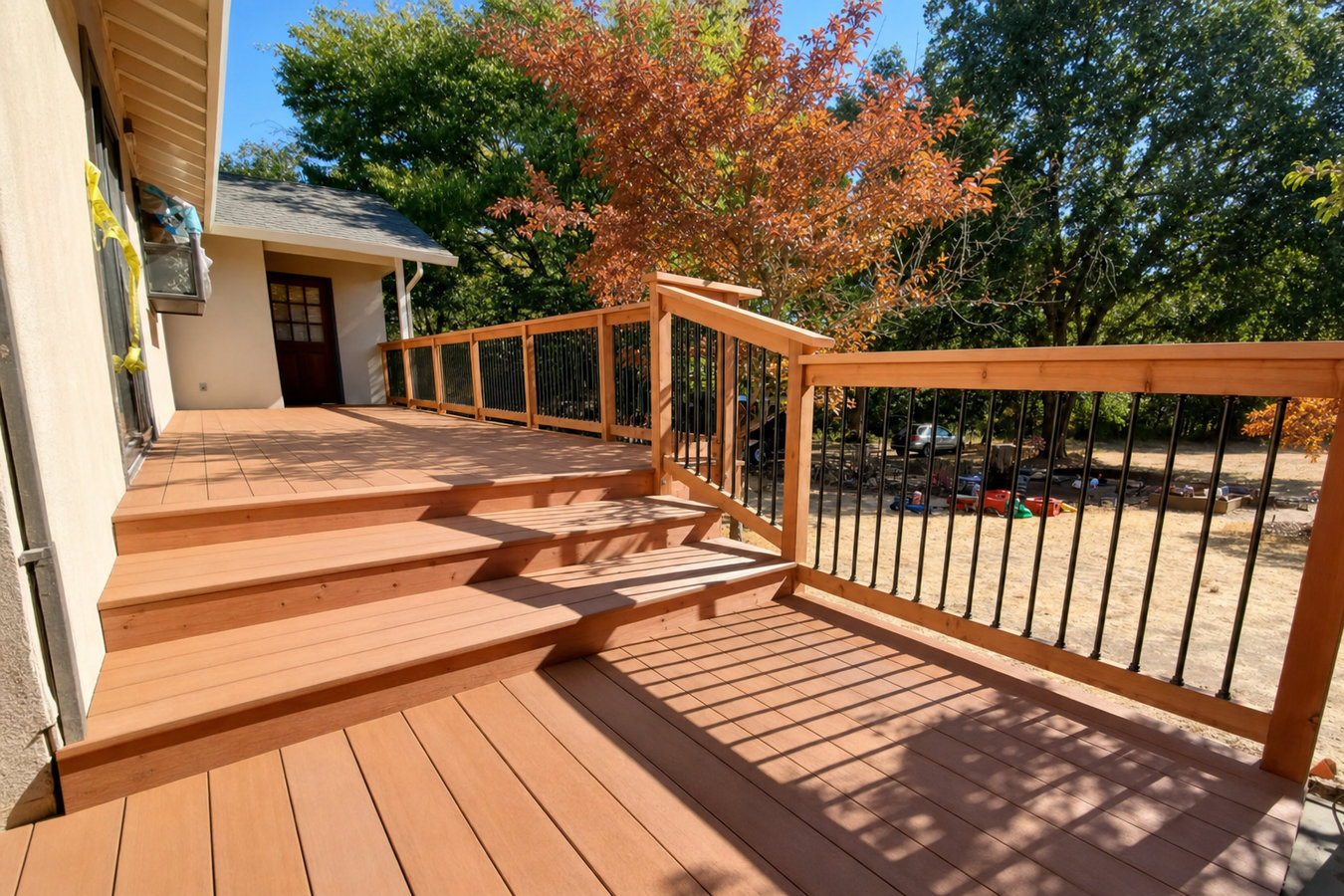
Solid railings anchored through the frame - not just screwed to the surface - with permits handled by us and materials chosen for Colton's heat.
Deck railing installation in Colton, CA covers new railing systems and full replacements on elevated decks - posts anchored through the deck frame, rails and balusters installed to California's spacing and height requirements, with most standard single-deck jobs completed in one day once permits are approved.
A railing is not just a finishing touch - if your deck sits 30 inches or more off the ground, California law requires one, and the way it is attached matters as much as whether it exists at all. A railing that is only surface-mounted with screws can pull free under load. Posts that are through-bolted into the deck framing stay anchored even when someone falls against them. In Colton, where summer heat dries out and weakens wood faster than in coastal areas, older railings that looked fine last spring can be genuinely unsafe by fall if they have not been maintained.
Many railing projects also reveal underlying issues with the deck frame itself - soft spots in the framing where posts need to anchor, or boards that have deteriorated enough to affect structural integrity. If the framing is compromised, that repair happens before the new railing goes in. For homes where the entire deck needs attention, our custom deck design and build service can replace the full structure and integrate new railings as part of a single project.
Stand at the edge of your deck and push firmly on the top rail. If it moves, sways, or feels loose at the base, the posts are no longer anchored securely. A railing that moves under light pressure will not hold if someone falls against it - this is a safety issue that needs to be addressed, not a cosmetic one to put off.
Run your hand along the rail and press on the posts near the base. If the wood feels spongy, crumbles slightly, or has deep cracks along the grain, it has been weakened by years of Colton's intense summer heat. Cracked or rotted wood cannot be painted over to fix - it needs to be replaced before the railing can be trusted.
If your deck sits 30 inches or more above the ground and has no railing, it does not meet California's current safety requirements. This is especially common on older Colton homes built before modern codes were in place. Adding a railing protects your family and brings the deck into compliance with state law.
Stand back and look at the vertical pieces filling your railing panel. If the spaces between them look wide enough to slip a hand through easily, they may not meet current child safety requirements. Older railings installed before modern codes were common often have gaps that are too large by today's standards - a 4-inch sphere should not be able to pass through.
Every railing project starts with a site visit where we measure the deck, assess the existing structure, and check whether the framing underneath is solid enough to anchor new posts correctly. In Colton, where many decks date from the 1970s through 1990s, the framing assessment is not a formality - soft or shifted framing has to be addressed before any new post can be anchored securely. The written estimate you receive breaks out materials, labor, and any required framing repairs separately. We submit the permit application to the City of Colton Building and Safety Division before work begins and coordinate the city inspection when installation is complete. Posts are through-bolted into the deck framing - never just surface-mounted - and all railing heights and baluster spacing are set to California's current safety requirements. The North American Deck and Railing Association outlines the professional standards we follow for post anchoring and railing system installation.
Railing work on a multi-level deck requires careful coordination - each level has its own railing perimeter, and the transition between levels needs to be handled so the stair sections meet code at every point. We scope railing installation for all levels in a single estimate so nothing is missed. Southern California sits in an active seismic zone, and the California Seismic Safety Commission underscores why lateral load resistance in post connections matters here - our post anchoring hardware is rated for the lateral movement that seismic activity requires.
Most affordable upfront - suits homeowners who plan to maintain the wood regularly and prefer a natural look, with the understanding that Colton's heat requires sealing every two to three years.
Blended wood fiber and plastic material that resists fading and cracking under prolonged heat and UV exposure - suits homeowners who want low maintenance without giving up the look of wood.
Powder-coated aluminum that will not rust, rot, or require painting - suits homeowners who want the lowest long-term maintenance option and a clean, modern look.
Stainless steel cable runs between posts instead of balusters - suits homeowners who want to preserve sightlines to a yard or pool area without blocking the view from the deck.
Tempered glass panels between posts instead of balusters - suits homeowners who want an unobstructed view and a contemporary look, typically used on decks with a scenic or pool backdrop.
Full railing installation across all levels of a step-down or terraced deck, including stair sections - suits homeowners with multi-level decks who want a consistent look and a single permit and inspection process.
A large share of Colton's housing stock dates from the 1970s through the 1990s, and decks from that era often have framing that has softened or shifted over the decades. Before new railing posts can be anchored correctly, the underlying structure has to be assessed - posts bolted into compromised framing will not hold under load no matter how well the surface work is done. Colton's intense summer heat, which regularly pushes above 100 degrees, also accelerates wood deterioration in a way that contractors from cooler regions often underestimate. The California Contractors State License Board requires all contractors doing this type of structural work to hold a current state license - you can verify any contractor's license on their site before committing to a project.
Homeowners in areas like San Bernardino and Highland face the same aging housing stock and climate conditions as Colton, and the permit requirements through the local building departments are consistent across this part of the Inland Empire. We have worked throughout this area and know what local inspectors look for - which makes the inspection step straightforward rather than a source of delays or re-work.
We ask a few questions before scheduling - how high your deck is, roughly how many linear feet of railing you need, and whether you have a material preference. This helps us give you a realistic ballpark before we drive out. We schedule a site visit within one business day of your call to measure and assess the deck in person.
We measure the deck, check the existing structure, and look at whether the framing is solid enough to anchor new posts. In Colton, where many decks are several decades old, this assessment matters before any work is quoted. You get a written estimate that breaks out materials and labor so you can see exactly what you are paying for.
For most elevated decks in Colton, we submit the permit application to the City of Colton Building and Safety Division before any work begins. This typically takes a few business days to two weeks depending on the city's current workload. We handle the submission - you do not need to contact the permit office yourself.
The crew arrives with materials ready for your project. Old railing comes out first if there is one, then new posts are set and anchored, rails are attached, and balusters are installed. Most standard jobs on a single-level deck are done in one day. After installation, a city inspector verifies the work. Before the crew leaves, we walk the railing with you and answer any maintenance questions.
Free on-site assessment. We handle the permits. Replies within one business day.
Every post we install is through-bolted into the deck's structural framing. Surface-mounted posts - attached only with screws to the top of the deck surface - can pull free when someone leans on them. Through-bolting is the installation method required by California's building code, and it is what a city inspector will check during the permit inspection. There are no shortcuts on something this important.
We pull the permit through the City of Colton Building and Safety Division on every elevated deck railing project. Unpermitted railing work is one of the most common issues that surfaces during home sales in the Inland Empire, and it can delay or kill a deal. The permit record stays with your home's paperwork - buyers and their inspectors can verify the work was done correctly and legally.
A significant share of Colton's housing stock was built between the 1970s and 1990s. On decks from that era, the framing underneath may have softened or shifted enough that new posts cannot be anchored correctly without a repair first. We assess this at the estimate stage - not after materials have already been ordered - so there are no surprises once work begins.
Not all railing materials perform the same way in a place that regularly hits triple digits in summer. We give you a direct recommendation - not a sales pitch for the most expensive option - based on how each material actually holds up in Colton's heat over time. If composite or aluminum makes more sense for your situation than wood, we will tell you why, and show you examples from local projects if you want them.
Installing deck railings is one of the more straightforward projects a deck builder handles - but only when the prep work, the permit, and the post anchoring are all done correctly from the start. That combination is what we bring to every job in Colton.
Full deck builds from design through final inspection - including integrated railing systems planned from the start rather than added later.
Learn MoreStep-down deck builds for sloped Colton yards, with railing installation scoped across every level and stair section in a single project.
Learn MoreSummer is coming fast - get your railing permitted, installed, and inspected before the heat peaks and the schedule fills up.